Pollution fines and port penalties
Administrative fines for pollution in Turkish waters: how they are calculated, how the vessel is freed against a bank or club letter, and how the fine is challenged within thirty days. Practice areas are listed; no claim of specialisation is made.
Written forOwners and managers · P&I clubs and correspondents · Masters · Charterers
Articles cited checked against the official text of the legislation · 17 September 2026
What is a pollution fine in Turkish waters?
- The fine is fixed by the Environment Law per gross ton, in bands, and tripled for companies (Law No. 2872 art. 20).
- Until it is paid or secured, the vessel is handed to the port authority and barred from sailing (Law No. 2872 art. 20).
- A P&I club letter is accepted as security by statute — the practical difference from a ship arrest.
- Thirty days to challenge the fine before the administrative court; filing does not stop collection (Law No. 2872 art. 25).
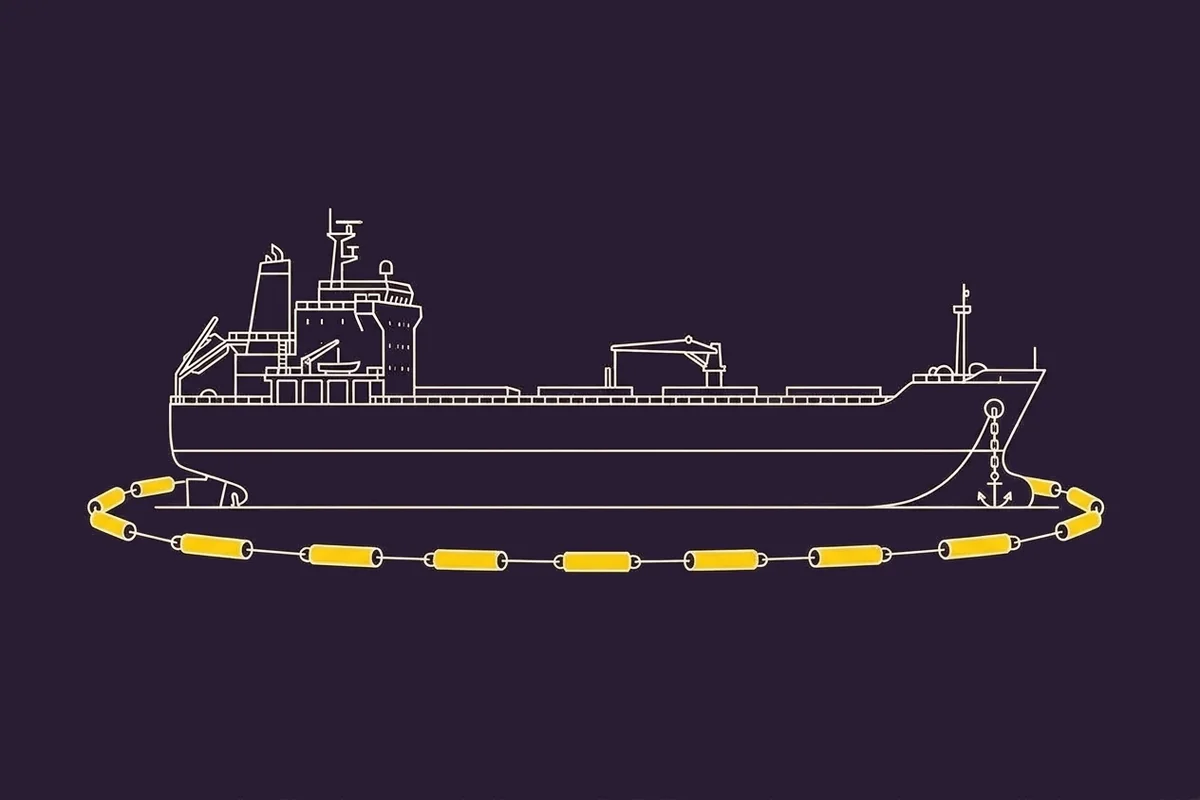
A pollution fine in Turkish waters is an administrative penalty under the Environment Law (Law No. 2872), imposed on the spot by the inspecting authority, calculated per gross ton of the vessel, and backed by one sanction that matters more than the money: until the fine is paid or security is given, the vessel is handed to the nearest port authority and barred from sailing (Law No. 2872 art. 20). Objecting to the fine and freeing the vessel are therefore two separate jobs, and the second cannot wait for the first.
The same Law covers discharges of oil and oily residues, dirty ballast, sewage, wash water and garbage in Turkish territorial waters and the waters under Turkish jurisdiction, in lakes and rivers, and the use of marine fuel above the permitted sulphur content (Law No. 2872 art. 20). Port and harbour penalties for breaches of port regulations, and detentions after a Port State Control inspection, follow their own routes; the Port State Control page covers the latter.
How is the fine calculated?
- The inspecting officers draw up a written record of the incident; the record goes to the authority empowered to impose the sanction, which decides the fine and serves the decision on the person concerned under the Notification Law (Law No. 2872 art. 25).
- The base amounts in the Law are revalued every year.
- Applied to a 30,000 GT tanker and tripled for a company, that formula gives a figure in the region of forty-five million lira before any reduction.
Read the full section
The inspecting officers draw up a written record of the incident; the record goes to the authority empowered to impose the sanction, which decides the fine and serves the decision on the person concerned under the Notification Law (Law No. 2872 art. 25). The amount is not discretionary: it is fixed by the Law per gross ton, in bands, with multipliers.
The bands
For oil and oil derivatives — crude, fuel, bilge, sludge, slops, oily waste — the Law sets one rate per gross ton for the first 1,000 GT of the vessel, a lower rate for each ton between 1,000 and 5,000, and a lower rate again for each ton above 5,000; tankers pay a higher scale than other vessels, and dirty ballast, sewage, wash water and garbage have their own scales (Law No. 2872 art. 20(ı)).
The multipliers
- Companies: the fines for vessel-source discharges are imposed on legal entities and businesses at three times the amount (Law No. 2872 art. 20, final paragraphs) — which is the case for virtually every commercial vessel.
- Special Environmental Protection Areas: fines are doubled (Law No. 2872 art. 20).
- Clean-up by the vessel: where it is established that the vessel cleaned up the pollution she caused with her own means, the fine is applied at one third (Law No. 2872 art. 20(ı)).
The figures, with a date
The base amounts in the Law are revalued every year. The figures printed in the Law for oil discharges, in force from 1 January 2026 (Law No. 2872 art. 20(ı)):
| Per gross ton | Tanker | Other vessel |
|---|---|---|
| Up to 1,000 GT | 5,752.34 lira | 2,876.16 lira |
| Each ton from 1,000 to 5,000 GT | 1,438.13 lira | 575.25 lira |
| Each ton above 5,000 GT | 143.75 lira | 143.75 lira |
Applied to a 30,000 GT tanker and tripled for a company, that formula gives a figure in the region of forty-five million lira before any reduction. Check the amount in force at the date of the incident; the lira figures change each January.
Freeing the vessel
- The Law itself names two forms: a bank guarantee letter, or a guarantee letter issued by the vessel's P&I club (Law No. 2872 art. 20(ı)).
- In practice, therefore, the club letter goes in first so that the vessel sails, and the fine is fought afterwards.
Read the full section
The Law's sanction for non-payment is physical. If the fine is not paid at once and in full, and no sufficient security is given, vessels and other movable craft are delivered to the nearest port authority and barred from navigation and operation (Law No. 2872 art. 20(ı)). The vessel sails again when the fine is paid or security is accepted.
What security is accepted
The Law itself names two forms: a bank guarantee letter, or a guarantee letter issued by the vessel's P&I club (Law No. 2872 art. 20(ı)).
| Pollution fine | Ship arrest | |
|---|---|---|
| P&I club letter | Accepted by statute (Law No. 2872 art. 20(ı)) | Works only if the claimant agrees (TCC art. 1372) |
| Given to | The authority that imposed the fine, for the amount of the fine | The enforcement officer or the court (TCC arts 1370–1371) |
Why the fine does not wait
Bringing a court action against the fine does not stop its collection.Law No. 2872 art. 25 — the fine is collected under the Misdemeanours Law (Law No. 5326) whatever the state of the objection
In practice, therefore, the club letter goes in first so that the vessel sails, and the fine is fought afterwards.
- Discharge found; the inspectors' recordLaw No. 2872 art. 25
- Fine fixed per gross ton, tripled for a companyLaw No. 2872 art. 20
 Bank or P&I club letter to the authorityLaw No. 2872 art. 20(ı)
 The vessel sailsLaw No. 2872 art. 20(ı)
 Administrative court within thirty days; filing does not stop collectionLaw No. 2872 art. 25
Lira figures are revalued every January; check the amount in force at the date of the incident.
Challenging the fine
- An administrative sanction under the Environment Law is challenged by an action before the administrative court within thirty days of service of the decision (Law No. 2872 art. 25).
- The vessel's oil record book, the sounding logs, the position and time records and the photographs taken on board are the evidence; they must be preserved from the first hour.
- The Environment Law also reserves the criminal law where the act is an offence (Law No. 2872 art. 20, final paragraph); questioning of the master by the prosecutor is a criminal-defence matter handled by the criminal-defence side of the practice.
Read the full section
An administrative sanction under the Environment Law is challenged by an action before the administrative court within thirty days of service of the decision (Law No. 2872 art. 25). The action is brought against the Ministry of Environment, Urbanisation and Climate Change, whichever body imposed the fine (Law No. 2872 art. 24). Filing does not suspend collection (Law No. 2872 art. 25); a separate application for a stay of execution is made in the action.
What the court looks at
The record drawn up by the inspectors is the foundation of the fine, and the grounds of objection are the grounds on which that record can be attacked:
- whether the discharge came from this vessel at all;
- whether the samples were taken and analysed as the regulations require;
- whether the tonnage band and the multipliers were applied correctly;
- whether the vessel's own clean-up was taken into account;
- whether the discharge was in fact within what the applicable rules permit.
The vessel's oil record book, the sounding logs, the position and time records and the photographs taken on board are the evidence; they must be preserved from the first hour.
Civil and criminal exposure
The fine is only the administrative layer. Damage to the environment, the coastline and related interests, and the cost of preventing and cleaning it, are maritime claims for which the vessel can be arrested (TCC art. 1352(d)). They are not on the Code's list of lien claims, and even the injury and tort liens are excluded where the damage falls under the international oil and hazardous-substance pollution regimes (TCC art. 1320(2)).
The Environment Law also reserves the criminal law where the act is an offence (Law No. 2872 art. 20, final paragraph); questioning of the master by the prosecutor is a criminal-defence matter handled by the criminal-defence side of the practice.
Documents we need from you
- The fine notification and the inspection record (tutanak)
- Vessel name, IMO number, gross tonnage and flag
- Oil record book, sounding and bilge logs, and the deck and engine logs for the period
- Position and time records, photographs and any video from on board
- The P&I club's details and the correspondent's file
- Power of attorney in the form Turkish courts accept — we send the template
Common questions
Can the fine be challenged?
Yes. An action is brought before the administrative court within thirty days of service of the decision, against the Ministry (Law No. 2872 arts 24, 25). Filing does not stop collection, so security is given first to free the vessel and the fine is contested afterwards.
Will the ship be held?
Until the fine is paid or sufficient security is given, the vessel is delivered to the nearest port authority and barred from sailing (Law No. 2872 art. 20). A bank guarantee letter or a letter from the vessel's P&I club is accepted as security by the Law itself (Law No. 2872 art. 20).
Is a P&I club letter enough?
Yes, for the fine: the Environment Law names the guarantee letter issued by the vessel's club insurer as an accepted form of security (Law No. 2872 art. 20). For a civil claim secured by an arrest the position is different — there the club letter works only if the claimant accepts it (TCC art. 1372).
Why is the amount so high?
Because it is calculated per gross ton, tripled for companies and doubled in protected areas (Law No. 2872 art. 20). The per-ton amounts are revalued every January; the figures on this page carry the date they were checked. The one statutory reduction is to one third where the vessel cleaned up the pollution with her own means.
Ports where we attend
Where the vessel is decides the court, the enforcement office and the timing. Istanbul directly; other ports through correspondent counsel.