Marine casualties
Collision, grounding, salvage and general average in Turkish waters, including the Turkish Straits: who investigates, who pays, how liability is limited, and what to do in the first hours. Practice areas are listed; no claim of specialisation is made.
Written forOwners and managers · P&I clubs and hull underwriters · Salvors · Cargo interests
Articles cited checked against the official text of the legislation · 17 September 2026
What happens after a casualty in Turkish waters?
- Casualties, and any deficiency observed on board, must be reported at once to the Turkish Straits Vessel Traffic Service, and pilots and masters must follow with a written report within twenty-four hours (Turkish Straits Maritime Traffic Regulation, art. 32).
Read the full section
- A casualty sets several clocks running at once: the safety investigation, the criminal inquiry, the administrative fine, the claims of the other vessel and of cargo, salvage, and the owner's right to limit.
- A casualty in the Turkish Straits ends innocent passage and puts the vessel under Turkish investigation and jurisdiction (Straits Regulation, art. 3).
- Collision claims are time-barred after two years, salvage after two, general average after one (TCC arts 1297, 1319, 1285).
- Limitation follows the 1976 Convention as amended by the 1996 Protocol (TCC arts 1328–1329).
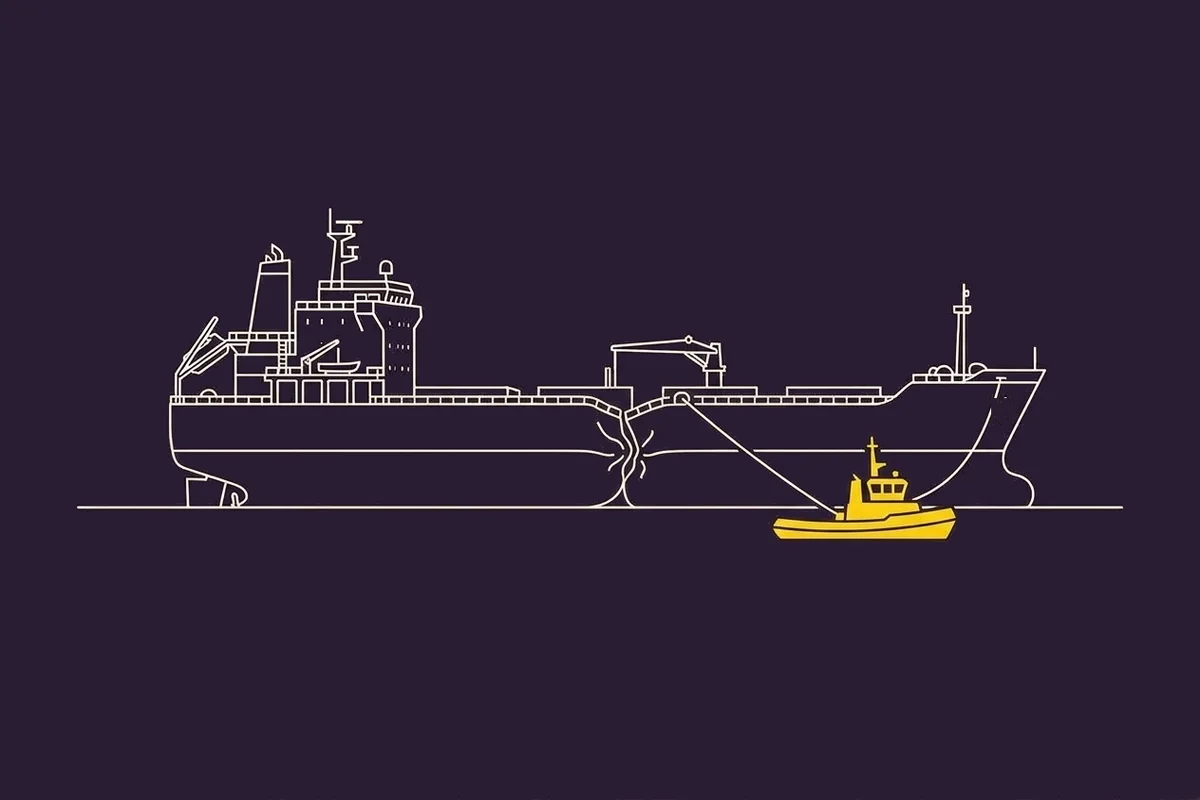
A casualty in Turkish waters — a collision, a grounding, a contact with a berth, a fire, a pollution event — sets several clocks running at once: the coastal state's investigation, the criminal inquiry where anyone was hurt or the sea polluted, the administrative fine, the claims of the other vessel and of cargo, salvage, and the owner's own right to limit. The first hours decide which of these the owner controls. This page sets out what Turkish law provides for each and what to do before the vessel is boarded.
The Turkish Straits deserve their own sentence
A vessel that collides, grounds or is otherwise involved in a casualty while transiting the Istanbul or Çanakkale Strait loses her status as a vessel in innocent passage.Turkish Straits Maritime Traffic Regulation, art. 3 — she becomes a vessel subject to investigation, inquiry or prosecution by the Turkish administrative and judicial authorities
Casualties, and any deficiency observed on board, must be reported at once to the Turkish Straits Vessel Traffic Service, and pilots and masters must follow with a written report within twenty-four hours (Turkish Straits Maritime Traffic Regulation, art. 32).
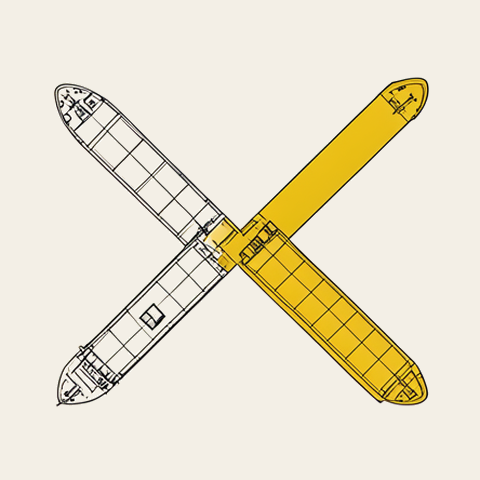 Collision, grounding, contact, fireTCC art. 1286
 Report to the Straits VTS at once; written report within twenty-four hoursTurkish Straits Maritime Traffic Regulation, art. 32
 Preserve VDR, logs, AIS and VTS records before anyone boardsMarine Casualty and Incident Investigation Regulation, art. 6
 Survey before suit at the commercial court of the placeTCC art. 1292
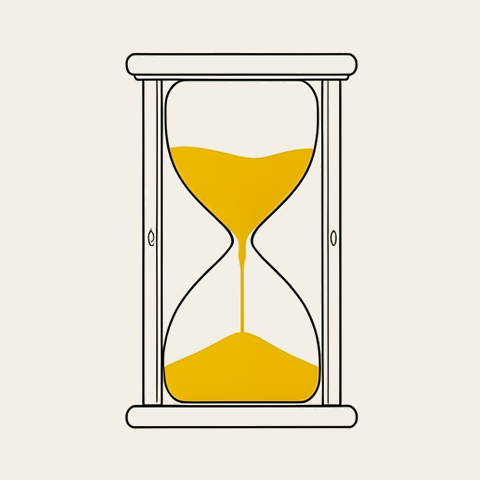 Two years for collision and salvage, one for general averageTCC arts 1297, 1319, 1285
The safety investigation and the criminal inquiry run separately; what is said to one reaches the other.
Collision
- Collision damage is a maritime claim for which the other vessel can be arrested in a Turkish port (TCC art. 1352), and where it results from the vessel's operation and not from a contract it carries a maritime lien (TCC art. 1320).
Read the full section
The Code's collision rules apply to damage caused to vessels, and to persons and property on board, by the collision of two or more vessels, and also to damage a vessel causes to another without physical contact by carrying out or omitting a manoeuvre or by breaking the navigation rules (TCC art. 1286).
Who pays
| Cause | Who bears the loss | Rule |
|---|---|---|
| Accident, force majeure, unascertained cause; one or all vessels at anchor | Each party bears its own loss | TCC art. 1287 |
| Fault of one vessel's owner or crew | That vessel's owner compensates the loss | TCC art. 1288 |
| Both at fault — vessels and property on board | Each owner in proportion to the gravity of its fault; equally where the proportion cannot be established or the faults are equal; not jointly and severally towards third parties | TCC art. 1289 |
| Both at fault — death and personal injury on board | The owners at fault jointly and severally, with recourse between them in proportion to fault | TCC art. 1290 |
| Fault of a pilot | A compulsory advisory pilot or a voluntary pilot: the owner's responsibility. A compulsory pilot who has the conduct of the vessel: not | TCC art. 1291 |
Evidence and time
- Survey before suit. Evidence may be preserved before any action by an application to the commercial court at the place of the collision — in Istanbul the court that deals with maritime matters — and the master or representative of every vessel involved is told of the survey; the survey report does not apportion fault (TCC art. 1292).
- No formality. No prior notice or other formality is required before suing (TCC art. 1293).
- Duty to assist. After a collision each master must, without serious danger to his own vessel, crew and passengers, assist the other vessel and, where possible, give her his vessel's name, port of registry and ports of departure and destination (TCC art. 1295).
- Time bar. Collision claims are time-barred two years after the collision, and recourse between owners one year after payment (TCC art. 1297).
Collision damage is a maritime claim for which the other vessel can be arrested in a Turkish port (TCC art. 1352), and where it results from the vessel's operation and not from a contract it carries a maritime lien (TCC art. 1320).
Salvage
- Salvage that produces a useful result earns a reward; salvage that does not, earns nothing, and the reward can never exceed the salved value (TCC art. 1304).
- It is fixed in money and not, unless agreed, as a percentage of the salved value (TCC art. 1305).
- A salvor of a vessel that threatened environmental damage, who has not earned a reward at least equal to it, may claim special compensation for its expenses from the owner (TCC art. 1312).
Read the full section
- kurtarma faaliyetisalvage operation — TCC art. 1298
- Any act undertaken to assist a vessel or other property in danger in navigable waters — with two exceptions that matter in practice: services rendered under a contract made before the danger arose, and services carried out despite the express and reasonable prohibition of the owner or master.
Salvage that produces a useful result earns a reward; salvage that does not, earns nothing, and the reward can never exceed the salved value (TCC art. 1304). Where the parties have not fixed the reward — or a fixed reward is to be adjusted by the court — it is set to encourage salvage, on (TCC art. 1305):
- the salved value;
- the salvor's skill and efforts, including those to prevent environmental damage;
- the degree of success;
- the danger;
- the time, expense and risk incurred;
- the promptness of the services;
- the readiness and value of the salvor's equipment.
It is fixed in money and not, unless agreed, as a percentage of the salved value (TCC art. 1305).
A salvor of a vessel that threatened environmental damage, who has not earned a reward at least equal to it, may claim special compensation for its expenses from the owner (TCC art. 1312). Salvage is a maritime claim (TCC art. 1352) secured by a maritime lien that ranks ahead of all earlier liens on the vessel (TCC arts 1320, 1324). Where a vessel is salved by another ship, her owner must share the reward with the master and crew and notify them of the shares (TCC art. 1310).
General average
- Unless the parties agreed otherwise, the adjustment is governed by the most recent York-Antwerp Rules as translated and published in the Official Gazette (TCC art. 1273).
- General average contributions are time-barred one year after the vessel's arrival at the place of adjustment (TCC art. 1285).
Read the full section
- müşterek avaryageneral average — TCC art. 1272
- An extraordinary sacrifice intentionally and reasonably made, or an extraordinary expense intentionally and reasonably incurred, for the common safety of the vessel, the cargo, other property and the freight in a common maritime adventure; the loss and expense directly resulting are shared among vessel, cargo, freight and other property.
Unless the parties agreed otherwise, the adjustment is governed by the most recent York-Antwerp Rules as translated and published in the Official Gazette (TCC art. 1273).
- Where. The adjustment is made at the place of destination or, if the vessel does not reach it, at the port where the voyage ended (TCC art. 1279).
- Who has it drawn up. The owner must have it drawn up without delay, failing which any interested party — including an insurer — may have it drawn up, and the court decides whether general average exists if the adjuster refuses (TCC art. 1278).
- Before the vessel leaves. Security for the contributions due from her must be given to the cargo interests (TCC art. 1276).
- Confirmation and objection. Interested parties may ask the court at the place of adjustment to confirm the adjustment or may object to it; objections must be raised fully at the first hearing (TCC art. 1281).
General average contributions are time-barred one year after the vessel's arrival at the place of adjustment (TCC art. 1285). A general average claim is a maritime claim (TCC art. 1352) and a contribution claim carries a maritime lien, ranking after the vessel's other charges (TCC arts 1320, 1323).
Limitation, pollution and the investigation
- Liability for maritime claims may be limited in Türkiye under the 1976 Convention on Limitation of Liability for Maritime Claims as amended by its 1996 Protocol, which the Code applies directly, including to cases without a foreign element (TCC arts 1328–1329).
- Pollution damage, the cost of preventing and cleaning it, and wreck removal are maritime claims for which the vessel can be arrested (TCC art. 1352).
Read the full section
Liability for maritime claims may be limited in Türkiye under the 1976 Convention on Limitation of Liability for Maritime Claims as amended by its 1996 Protocol, which the Code applies directly, including to cases without a foreign element (TCC arts 1328–1329).
- The Code extends the Convention's application to persons and vessels the Convention itself would leave to national law, subject to the limits it sets for small and inland vessels (TCC art. 1330).
- Limitation in Türkiye is denied to a person whose own country does not allow it (TCC art. 1330).
- Where the claimant proves that a higher limit applies in that person's country, the higher limit is applied (TCC art. 1330).
Pollution damage, the cost of preventing and cleaning it, and wreck removal are maritime claims for which the vessel can be arrested (TCC art. 1352). The administrative fine that follows a discharge is a separate matter, explained on the pollution fines page.
Investigation and the criminal side
The Transport Safety Investigation Centre investigates very serious casualties in Turkish waters whatever the flag, and may open a preliminary investigation into serious casualties and incidents (Marine Casualty and Incident Investigation Regulation, art. 9); its investigation is a safety investigation, run under the IMO Casualty Investigation Code and in cooperation with the flag state and other substantially interested states (Marine Casualty and Incident Investigation Regulation, art. 11).
It is not the criminal inquiry. Where a person has died or been injured, or the sea has been polluted, the public prosecutor opens his own investigation, and the master and officers may be questioned or detained. That side is handled by the criminal-defence side of the practice and is explained on our sister site for criminal defence in Türkiye; the two must be run together from the first hour, because what is said to one reaches the other.
Documents we need from you
- Master's report and the crew's statements, written before anyone else asks
- VDR and ECDIS data, bridge and engine logs, AIS and VTS communications
- Charts, passage plan, weather and pilotage records; the pilot's name and card
- Class, flag and P&I details and the correspondent's file
- Any notice, fine, detention or survey record served on board
- Vessel name, IMO number and where she is now
- Power of attorney in the form Turkish courts accept — we send the template
Common questions
Will the master be questioned?
Probably, by two different bodies. The Transport Safety Investigation Centre may board, interview the master and crew and take records, and may hold the vessel until it has (Marine Casualty and Incident Investigation Regulation, art. 6); where anyone was hurt or the sea polluted, the public prosecutor opens a criminal investigation. The criminal side is handled by the criminal-defence side of the practice; tell us before the first interview, not after.
How is fault apportioned after a collision?
Where one vessel is at fault, her owner pays (TCC art. 1288). Where both are at fault, each pays for property damage in proportion to its fault, equally where the proportion cannot be fixed, and the owners are jointly and severally liable for death and injury (TCC arts 1289, 1290). Accidental collisions leave each party with its own loss (TCC art. 1287).
Can the other vessel be arrested for our collision damage?
Yes. Damage caused by the operation of a vessel is a maritime claim (TCC art. 1352) and, as a tort claim, carries a maritime lien (TCC art. 1320). The application is made to the court of the port where she lies (TCC art. 1355), within the two-year time bar (TCC art. 1297).
Can liability be limited in Türkiye?
Yes, under the 1976 Limitation Convention as amended by the 1996 Protocol, which the Code applies directly (TCC art. 1328). The right is denied to a person whose own country does not allow limitation, and a higher foreign limit is applied where the claimant proves it (TCC art. 1330).
Ports where we attend
Where the vessel is decides the court, the enforcement office and the timing. Istanbul directly; other ports through correspondent counsel.